


- University
- Academic
- Schools/Vocational Schools
- Vocational School of Justice
- Vocational School
- Vocational School
- Department of Banking and Insurance (Turkish)
- Department of Computer Programming (Turkish)
- Department of Foreign Trade (Turkish)
- Department of Graphic Design (Turkish)
- Department of Interior Design (Turkish)
- Department of Construction Technology (Turkish)
- Department of Occupational Health and Safety (Turkish)
- Department of Media and Communication (Turkish)
- Department of Architectural Restoration (Turkish)
- Department of Radio and Tv Programming (Turkish)
- Department of Civil Aviation Cabin Services (Turkish)
- Department of Civil Aviation Transportation Management (Turkish)
- Department of Tourism and Hotel Management (Turkish)
- Department of Applied English Translation
- Vocational School Of Health Services
- Vocational School Of Health Services
- Department of Child Development (Turkish)
- Department of Physiotherapy (Turkish)
- Department of Paramedic (Turkish)
- Department of Opticianry (Turkish)
- Department of Medical Documentation and Secreteriat (Turkish)
- Department of Medical Imaging Techniques (Turkish)
- Department of Medical Laboratory Techniques (Turkish)
- Department of Elderly Care (Turkish)
- School of Applied Management Sciences
- School of Foreign Languages
- Faculties
- Faculty of Arts and Sciences
- Faculty of Fine Arts and Design
- Faculty of Law
- Faculty of Communication
- Faculty of Business
- Faculty of Engineering
- Faculty of Engineering
- Department of Computer Engineering
- Department of Biomedical Engineering
- Department of Electrical and Electronics Engineering
- Department of Industrial Engineering
- Department of Food Engineering
- Department of Genetics and Bioengineering
- Department of Aerospace Engineering
- Department of Civil Engineering
- Department of Mechanical Engineering
- Department of Mechatronics Engineering
- Department of Software Engineering
- Faculty of Health Sciences
- Medicine
- Graduate School
- Common Courses
- Schools/Vocational Schools
- Research
- Research Centers
- Library
- Smart Campus
- Technology Transfer Office
- İzmir Sciencepark
- Continuous Education Center (EKOSEM)
- Children's University
- Ethics Committee
- Teaching and Learning Center (EKOEĞİTİM)
- Psychology Application and Research Center
- Researcher Training Coordinatorship
- Research Collaborations And Innovation Coordinatorship
- Campus
- INTERNATIONAL
- Contact
Department of Logistics
VSC 206 | Course Introduction and Application Information
| Course Name |
Cost Accounting
|
|
Code
|
Semester
|
Theory
(hour/week) |
Application/Lab
(hour/week) |
Local Credits
|
ECTS
|
|
VSC 206
|
Spring
|
3
|
0
|
3
|
3
|
| Prerequisites |
None
|
|||||
| Course Language |
English
|
|||||
| Course Type |
Required
|
|||||
| Course Level |
Short Cycle
|
|||||
| Mode of Delivery | - | |||||
| Teaching Methods and Techniques of the Course | - | |||||
| National Occupation Classification | - | |||||
| Course Coordinator | - | |||||
| Course Lecturer(s) | ||||||
| Assistant(s) | - | |||||
| Course Objectives | This course introduces candidates to costing techniques that are likely to be utilised within cost accounting. The objective of the unit is to enable candidates to maintain a working accounting system for classifying and recording cost accounting information for purposes such as stock valuations and profit measurement. |
| Learning Outcomes |
The students who succeeded in this course;
|
| Course Description | It is primarily intended for candidates who expect to take up a career in management or cost accounting. It would also be relevant to those with appropriate work experience who wish either to formalise their qualifications or progress in their accounting career. |
| Related Sustainable Development Goals |
|
|
|
Core Courses | |
| Major Area Courses | ||
| Supportive Courses | ||
| Media and Management Skills Courses | ||
| Transferable Skill Courses |
WEEKLY SUBJECTS AND RELATED PREPARATION STUDIES
| Week | Subjects | Related Preparation |
| 1 | Principles of sequential numbering and coding sequences | SQA materials |
| 2 | Classify costs by nature and develop an appropriate comprehensive coding system that can be expanded. The system developed should identify direct and indirect costs. | SQA materials |
| 3 | Devise a cost coding system appropriate for a given organisation | SQA materials |
| 4 | Prepare a cost analysis from examples of invoices or cost schedules using the cost coding sequence devised. | SQA materials |
| 5 | Complete documents involved in ordering, acquiring, and recording materials stock. | SQA materials |
| 6 | Record and price receipts and issues of materials using LIFO, FIFO and Weighted Average methods. | SQA materials |
| 7 | Place a value on closing stock of material; calculate the profit effect of the 3 methods noted above. | SQA materials |
| 8 | Calculate accepted stock control indicators such as minimum and maximum stock levels; reorder levels and economic order quantities. | SQA materials |
| 9 | Purpose and importance of accurate stock control. | SQA materials |
| 10 | List the procedures for recording labour costs, including documentation required. | SQA materials |
| 11 | Calculate wages in differing situations within the workplace, for example piece rate, rate, high day rate, and differential piecework schemes. | SQA materials |
| 12 | Identify idle time and record it within a cost accounting system. | SQA materials |
| 13 | Incentive schemes e.g. premium bonus schemes, commission and group bonus schemes. | SQA materials |
| 14 | Calculate the effect on profits of adopting differing incentive schemes. | SQA materials |
| 15 | Review of the Semester | |
| 16 | Review of the Semester |
| Course Notes/Textbooks | SQA materials |
| Suggested Readings/Materials |
EVALUATION SYSTEM
| Semester Activities | Number | Weigthing |
| Participation |
1
|
10
|
| Laboratory / Application | ||
| Field Work | ||
| Quizzes / Studio Critiques | ||
| Portfolio | ||
| Homework / Assignments | ||
| Presentation / Jury | ||
| Project | ||
| Seminar / Workshop | ||
| Oral Exams | ||
| Midterm |
2
|
40
|
| Final Exam |
1
|
50
|
| Total |
| Weighting of Semester Activities on the Final Grade |
3
|
50
|
| Weighting of End-of-Semester Activities on the Final Grade |
1
|
50
|
| Total |
ECTS / WORKLOAD TABLE
| Semester Activities | Number | Duration (Hours) | Workload |
|---|---|---|---|
| Theoretical Course Hours (Including exam week: 16 x total hours) |
16
|
3
|
48
|
| Laboratory / Application Hours (Including exam week: '.16.' x total hours) |
16
|
0
|
|
| Study Hours Out of Class |
10
|
3
|
30
|
| Field Work |
0
|
||
| Quizzes / Studio Critiques |
0
|
||
| Portfolio |
0
|
||
| Homework / Assignments |
0
|
||
| Presentation / Jury |
0
|
||
| Project |
0
|
||
| Seminar / Workshop |
0
|
||
| Oral Exam |
0
|
||
| Midterms |
2
|
4
|
8
|
| Final Exam |
1
|
5
|
5
|
| Total |
91
|
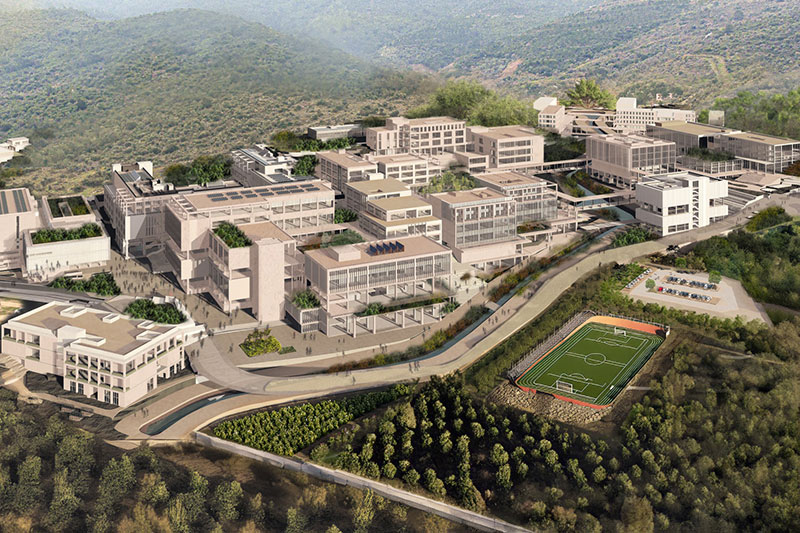
IZMIR UNIVERSITY OF ECONOMICS GÜZELBAHÇE CAMPUS
DetailsGLOBAL CAREER
As Izmir University of Economics transforms into a world-class university, it also raises successful young people with global competence.
More..CONTRIBUTION TO SCIENCE
Izmir University of Economics produces qualified knowledge and competent technologies.
More..VALUING PEOPLE
Izmir University of Economics sees producing social benefit as its reason for existence.
More..
You are one step ahead with your graduate education at Izmir University of Economics.